Troubleshooting Guide
HVAC Troubleshooting Checklist: No Cooling, Noise, Airflow, and Water Issues
A practical checklist for noticing simple HVAC problems, describing symptoms clearly, and knowing when the issue should move from homeowner review to a professional service call.
Quick Answer
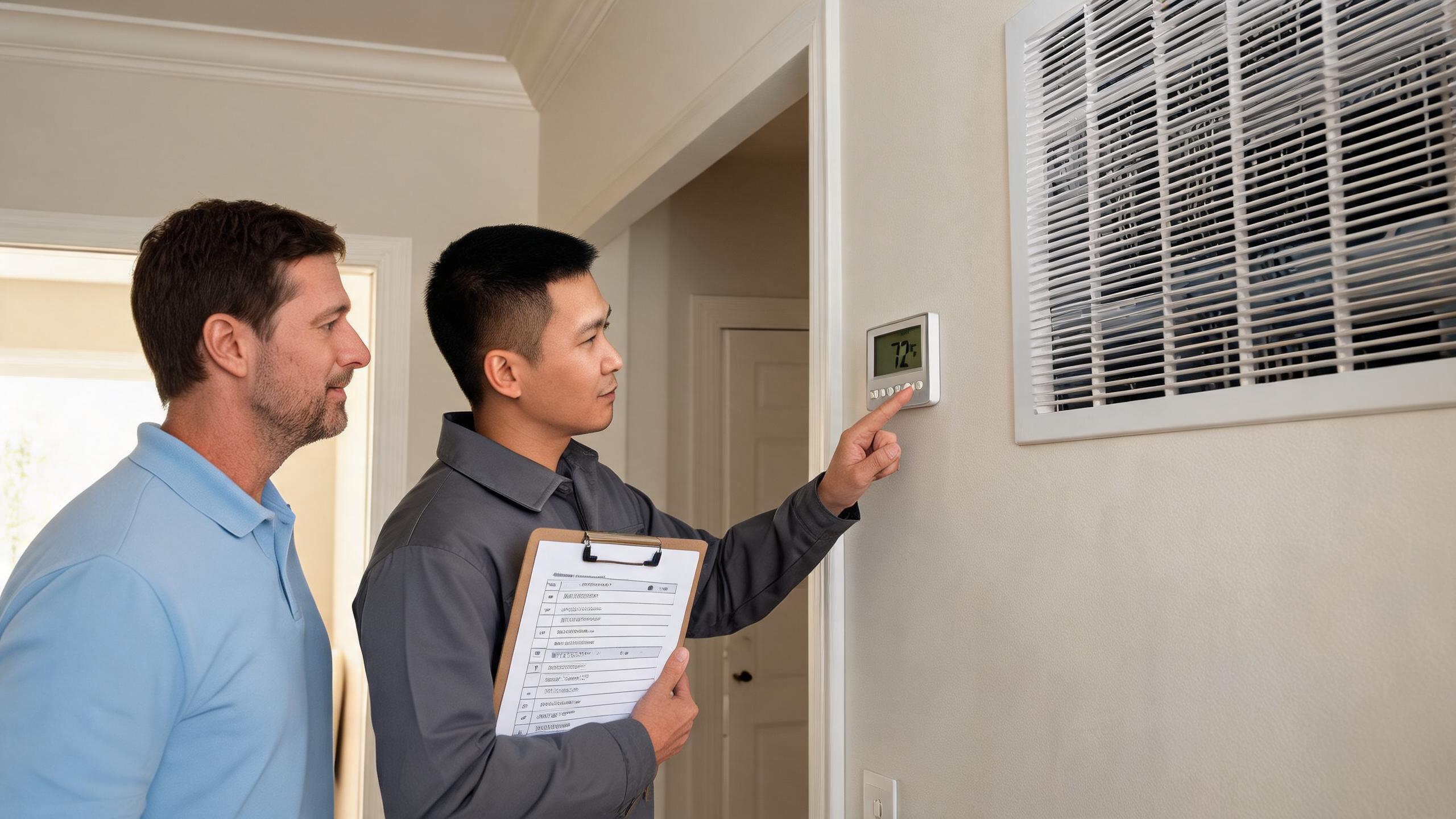
A homeowner HVAC troubleshooting checklist should start with low-risk basics: thermostat settings, power status, air filter condition, blocked vents, outdoor unit clearance, unusual sounds, visible water, and whether the system runs in a normal cycle. If the issue involves electrical parts, refrigerant, burning smells, repeated breaker trips, ice buildup, or no cooling during extreme heat, it is time to call a qualified HVAC technician.
When an HVAC system acts up, the first few minutes can feel messy. The house is warm, the unit sounds different, or the thermostat says one thing while the rooms feel another way. A checklist helps you slow the moment down and separate useful observations from guesswork.
This guide is not meant to turn a homeowner into a technician. The goal is simpler: notice the right clues, avoid unsafe poking around, and explain the problem clearly if you need to book service.
Safety note: do not open sealed electrical panels, handle refrigerant lines, bypass safety switches, or keep resetting a breaker that trips again. Those are service call situations, not checklist tasks.
Homeowner HVAC Troubleshooting Checklist
1. Confirm the thermostat mode and setting
Make sure the thermostat is set to cooling, the target temperature is below the room temperature, and the display is responsive. A wrong mode or weak thermostat battery can look like a system failure.
2. Check whether the system is actually starting
Listen for whether the indoor blower and outdoor unit start normally. A system that hums, clicks repeatedly, or never reaches a steady run gives a technician better clues than a vague "it does not work."
3. Look at the air filter
A clogged filter can reduce airflow, strain the system, worsen cooling, and contribute to freeze-up problems. If the filter is visibly packed with dust, replacement is a reasonable first step.
4. Walk the vents and return grilles
Check whether supply vents are open, return grilles are blocked by furniture, and airflow feels weaker in one area than another. Uneven airflow can point to duct, filter, or blower-side issues.
5. Review the outdoor unit area
Without removing covers, look for leaves, grass clippings, storage items, or other obvious airflow blockers around the condenser. The outdoor unit needs clear space to release heat.
6. Notice water, ice, or unusual moisture
Water near the indoor unit, ice on lines, or repeated drain pan issues are important clues. Ice in particular should not be ignored because it can point to airflow or refrigerant-related problems.
Stop and Call Faster If You Notice These
- The breaker trips again after being reset once.
- There is a burning smell, smoke, or visible electrical damage.
- The outdoor unit makes loud grinding, banging, or screeching sounds.
- The system is frozen and airflow has dropped sharply.
- The house is not cooling during severe heat and vulnerable people are inside.
- The system starts and stops repeatedly without completing a normal cycle.
Common HVAC Symptoms and What to Notice
System runs but does not cool well
Notice whether air is coming from the vents, whether the outdoor unit is running, and whether the problem affects the whole home or only certain rooms.
Airflow feels weak
Start with the filter and vents, then note whether the weakness is everywhere. Whole-home weak airflow can be more significant than one room with a closed vent.
System makes a new sound
The timing matters. A sound at startup, during steady operation, or at shutdown can point to different issues, so write down when it happens.
Indoor humidity feels high
Humidity can rise when the system short cycles, is oversized, has airflow trouble, or is not running long enough to remove moisture effectively.
HVAC Troubleshooting Table
| What You Notice | Homeowner Check | When to Call |
|---|---|---|
| Thermostat blank or unresponsive | Check batteries and basic settings | If power is present but the thermostat stays blank |
| Weak airflow | Check filter, vents, and return grilles | If airflow remains weak after simple blockers are cleared |
| Runs but does not cool | Confirm mode, setpoint, filter, and outdoor unit operation | If the system runs steadily but supply air stays warm |
| Ice on the system | Turn cooling off and avoid forcing operation | Call if ice appears or returns after thawing |
| Water near indoor equipment | Note where water appears and whether the system shut down | If water returns, spreads, or appears near electrical components |
| Repeated clicking or rough startup | Notice whether the system reaches steady operation | If clicking repeats or the unit struggles to start |
The best troubleshooting notes are specific. Instead of saying "the AC is acting weird," say: "The thermostat is set to cool at 72, the indoor fan runs, the outdoor unit does not start, and I hear repeated clicking." That kind of description can make the first service conversation cleaner.
Frequently Asked Questions
Should I keep resetting the breaker if the HVAC trips it?
No. One reset may help confirm a trip, but repeated breaker trips can signal a serious electrical or equipment issue.
Can a dirty filter really stop an AC from cooling?
It can contribute to poor cooling, weak airflow, and even freeze-up conditions. It is one of the easiest checks before a service call.
Is troubleshooting the same as repairing?
No. Troubleshooting helps identify clues. Repair means correcting the actual cause, and many HVAC causes require a qualified technician.
What information should I give an HVAC company?
Share when the problem started, what the thermostat shows, whether the indoor and outdoor units run, what sounds or moisture you noticed, and whether airflow changed.
Next Step
Use the Checklist Before Comparing Repair Quotes
Once you know what changed, compare repair advice with a clearer description of the symptom and the system behavior.
Compare HVAC Repair Quotes